Ryan William Paerl – Principal Investigator
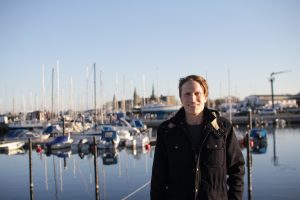
I am a native of eastern North Carolina (Beaufort, NC) and an aquatic microbiologist with strong interests in biogeochemistry as well as microbial ecology, physiology, metabolism, and diversity.
<><><><><><><><><><>
Current Lab Members:
Garrett Sharpe – Post-doctoral Researcher
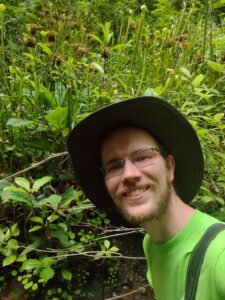
I am a recent Ecology Ph.D. graduate from the University of North Carolina in Chapel Hill with experience in traditional genetics, metagenomics, metatranscriptomics, and bioinformatics. My previous work includes describing antimicrobial production genes in the carbon and sulfur metabolism model organism Ruegeria pomeroyi, using quantitative metagenomics to describe new Synechococcus strains in the Northeast Pacific with a novel loss of nitrate assimilation, and using quantitative metagenomics and metatranscriptomics to observe in situ growth rates and metabolic behavior of a Northeast Atlantic microbial community in dissolved organic matter remineralization experiments. In the Paerl lab, I am currently using chemostats to observe how marine bacteria’s proteomes and transcriptomes respond under different B1 availability scenarios, and in the near future I will be returning to the Northeast Pacific to isolate and study the nitrate-assimilation loss Synechococcus strains and obtain metagenome samples to determine the spatial and temporal patterns of this nitrogen-utilization phenotype.
Courtney Novak – PhD Graduate Student, Marine Science

I’ve graduated with a BS in Biochemistry and a BS in Environmental Science from Wilkes University. My previous experience is in biochemistry, paleogeochemistry, and food web ecology specifically in grassland ecosystems. After working in a nutrient analysis lab for a year, I decided to utilize my previous experiences and passion for biogeochemistry and nutrient cycling to pursue a PhD at NCSU in the Paerl Lab! Broadly speaking, I’m primarily interested in the processes involved with vitamin B1 in open ocean microbes and how changes in abiotic factors impact this cycling.
Kendall Godwin – PhD Graduate Student, Microbiology
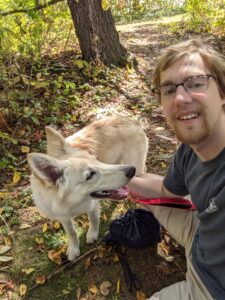
I earned my BSc in Microbiology from The Pennsylvania State University in 2021, where I participated in undergraduate research in molecular neuroscience/genetics and soil microbiology/biogeochemistry. Before beginning my studies at North Carolina State University, I spent two years as a Microbiology Technician with iuvo BioScience (Rush, NY), a contract research organization focusing on medical device and pharmaceutical testing, where I specialized in analyzing microbial contamination in cleanroom facilities and manufacturing spaces.
I am honored to be here at NC State working towards my PhD in Microbiology! Broadly, I am interested in environmental microbiology, where I hope to bridge the gap between culture-dependent and culture-independent interrogations of the microbial world in which we live. By improving our understanding of microbial ecology and physiology, we can learn to better manage and protect our global environment through existing strategies and novel biotechnological methods.
Here in the Paerl Lab, I am a part of the North Carolina Center for Coastal Algae, People & the Environment (NC C-CAPE), where I am characterizing the cyanobacterial ecology of the Pamlico Estuary System and learning how cyanobacterial populations in and around the system affect cyanotoxin reserves. Determining where cyanotoxins are coming from and which factors influence their production and transport may allow us to better predict toxic cyanobacterial harmful algal blooms (cHABs) and develop interventional strategies to protect the public and the estuary environment.
Rachel Wood – MS Graduate Student, Marine Science

I graduated from NC State in 2025 with a BS in human biology and a BA in chemistry. I have been working in the Paerl lab since the fall of 2024 developing a method for quantifying vitamin B1 (thiamin) and its precursors so we can better understand nutrient cycling within microbial communities in open ocean environments. My current research focus involves the quantification of B1 and precursors and understanding how prototrophic species may contribute to nutrient cycling in microbial communities. I am also part of the TEAL-SHIPS collaborative research project within the UNC system that involves a seasonal interdisciplinary transect cruise to the gulf stream. These transect expeditions are currently exploratory to better understand depth profiles and seasonal changes in microbial abundance and nutrients from the NC coast to the North Atlantic continental shelf.
Sarah Gasko – MS Graduate Student, Marine Science

I got my BS in Ecology, Evolution, and Biodiversity from the University of Michigan in 2025. Here, found a passion for microbiology through undergraduate research focused on marine bacteria/virus interactions. The summer of 2024, I was awarded an NSF REU position, where I was able to study Chesapeake Bay ecology. My project was based on the way zooplankton grazing rates of phytoplankton may be affected across the saltwater gradient of this estuary. These experiences shaped my interest in aquatic microbiology on the US east coast. Now, as a graduate student in the Paerl Lab, my goal is to understand more about how freshwater Cyanobacteria, namely harmful bloom-forming species, can be mitigated by algaecide.
<><><><><><><><><><>
Current Undergraduate Students:
- Andrew Morris
- Madison Geist
- Carissa Spruill
- Meara Kane
- Bella Russ
<><><><><><><><><><>
Lab Alums:
- Graduate students:
- Joel Sanchez – PhD Marine Science
- Nathaniel Curtis – PhD Marine Science
- Hwa Huang – PhD Marine Science (incomplete)
- Rebecca Venezia – MS Marine Science
- Sarah Watson – MS Microbiology
- Undergraduate researchers
- Gavin Carter
- Wil Mabe
- Rachel Wood
- Jared Mathewson
- Jo Hines
- Valerie Dong
- Patrick Seebold
- Iliana Claudio
- Mackenzie Fiss
- Kemoni Hughes – NCCU
- Kaylee Ransdell
- David Polling
- Tess Kelly
- Maddy Arena
- Bella Russ
- Nathan Philipovich
- Sydney Kuczenski
- Andrew Miller
- Zofia Cavalli