Research areas of primary interest include:
- Microbial contributions to nutrient cycles (esp. N, vitamins)
- Cyanobacterial ecology/physiology and impacts on water quality
- Marine picophytoplankton ecology
- Cross-field collaborative research – e.g. atmospheric science, engineering, as well as chemical/physical oceanography
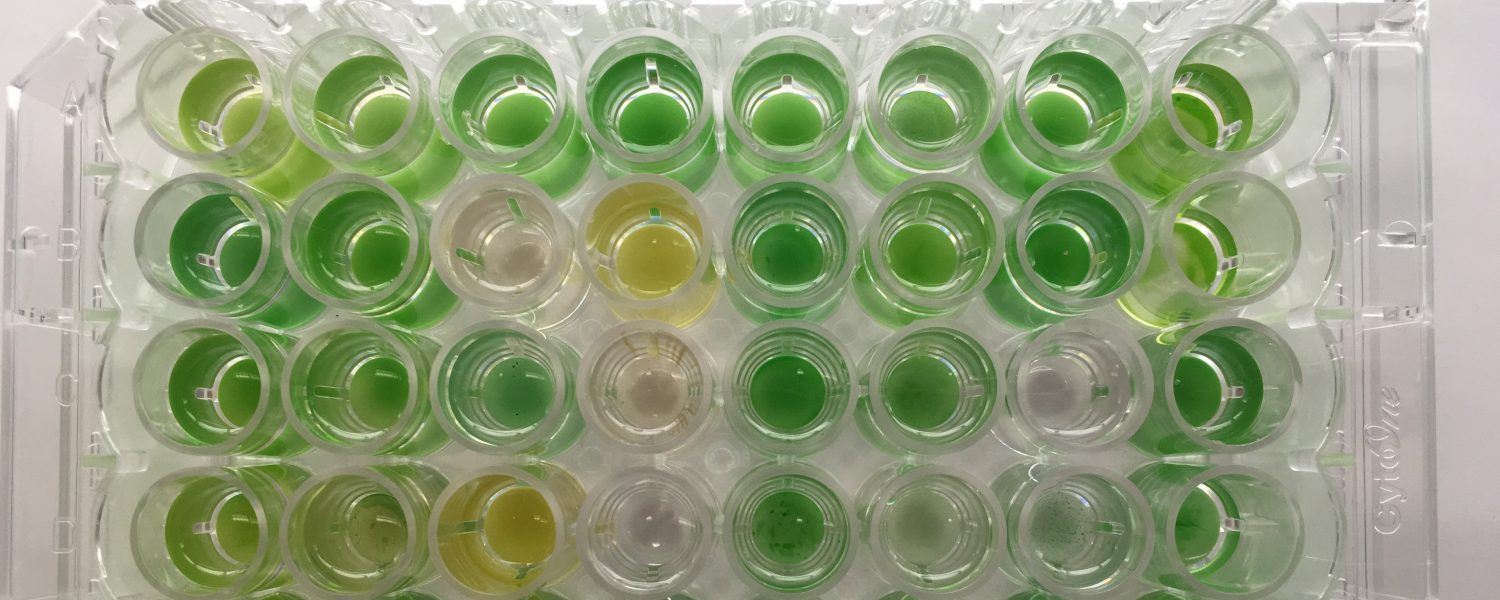
Broadly, we use ‘traditional’ (microscopy, cell culturing) and ‘modern’ techniques (qPCR, PCR, DNA/cDNA sequencing, isotopic tracing, flow cytometry) to test hypotheses and address problems. Laboratory and field-based experiments are integral to many projects.
Current research projects:
- Resolving the diversity and distribution of cyanotoxic populations within the Pamlico River Estuary; NC C-CAPE Center
- Microbial Sources of taste and odor compounds in Lake Michie (Funding: WRRI & City of Durham Water Management)
- Identifying toxin producing cyanobacteria in the Chowan River and Albemarle Sound (Funding: Center for Human Health and Environment, NCSU)
- Picocyanobacterial diversity and phenotypes in the Pamlico Albemarle Sound System
- Vitamin B1 cycling as well as consumption and production by marine plankton
- Drone-based sampling and assessment of algal growth
Past/present funding sources:
- NC Water Resources Research Institute (WRRI)
- NC SeaGrant
- The National Science Foundation (NSF)
- National Institute of Environmental Health Sciences (NIEHS)
- City of Durham Water Management
- NCSU Center for Human Health and Environment (CHHE)
- San Francisco Bay Delta Council